
The insurance industry is trying to get to grips with provisions in the proposed Insurance Amendment Bill, which gives additional powers to the Insurance Regulatory and Development Authority of India (Irdai), while there is ambiguity in the very definition of the insurance business, according to industry experts.

Insurance intermediaries who receive disproportionately high commissions are likely to see a decline in their payouts, post the new Insurance Amendment Bill. The new Bill gives the Insurance Regulatory & Development Authority of India (Irdai) the power to disgorge unlawful gains made by insurers and intermediaries as well as the right to limit commissions paid to intermediaries.

Finance Minister Nirmala Sitharaman on Tuesday said that raising the FDI limit to 100 per cent in the insurance sector will help attract more capital, improve competition and increase insurance penetration by making policies more affordable.

The government is likely to introduce a bill seeking amendments to the Insurance Act, 1938, during the upcoming Budget session to achieve 'Insurance for All by 2047'. Some of the provisions, which could be part of the amendment bill, include composite license, differential capital, reduction in solvency norms, issuing captive license, change in investment regulations, one-time registration for intermediaries and allowing insurers to distribute other financial products, sources said.

The Indian government is reportedly considering increasing the foreign direct investment (FDI) limit in the pension sector to 100 per cent, bringing it in line with the insurance sector. A Bill to amend the PFRDA Act, 2013, is expected in an upcoming Parliament session.

'All this talk about women's reservation and Nari Shakti is a mirage.' 'It is a classic Trojan horse to bring about an alteration in the structure of political competition -- to the enduring advantage of the BJP.'

The government is committed to ensure clearance of the Insurance Amendment Bill, which is expected to allow a higher foreign direct investment in the country's insurance sector, a central government minister said.

The Union Cabinet on Friday approved 100 per cent foreign direct investment (FDI) in the insurance sector, a move that was welcomed by industry as it would help attract more capital and global expertise, while boosting insurance coverage in the country. A bill to amend the insurance law is likely to be tabled on Monday in Parliament, whose winter session is slated to conclude on December 19.

A nationwide strike called by central trade unions saw a mixed response across India, impacting various sectors and states differently, with some areas experiencing disruptions while others remained largely unaffected.
The Insurance Regulatory and Development Authority of India (Irdai) has asked at least 10 general and life insurance companies to submit a detailed road map for their listing strategies by the end of this month, according to multiple sources with direct knowledge of the matter. "The regulator met four life and six general insurers last month and asked them to provide their listing strategies by the end of February," said one of the sources.

The operator's liability in the case of an incident is limited to 3,000 crore for reactors with thermal power above 3,600 Megawatt; 1,500 crore for reactors with thermal power between 1,500 Mw and 3,600 Mw; 750 crore for reactors with thermal power between 750 Mw and 1,500 Mw; 300 crore for reactors with thermal power between 150 Mw and 750 Mw; and 100 crore for reactors having thermal power up to 150 Mw, fuel cycle facilities other than spent fuel reprocessing plants and transportation of nuclear materials.
The government has circulated among members ofParliament a new draft of the Amendment of Insurance laws Bill, 2025, proposing stricter safeguards on the utilisation of life insurance funds and other specified insurance business funds, particularly for dividend payouts, bonuses, and servicing of debentures.

Foreign investment capped at 49 per cent.
.jpg)
Foreign investment cap in insurance sector raised to 49 per cent.

FDI cap may remain intact at 26% as Cabinet takes up legislation this week.

A bill to raise the ceiling of gratuity for employees to Rs one million (Rs 10 lakh) from Rs 3,50,000 was passed by the Lok Sabha without discussion on Monday.

The government on Friday approved the much-awaited comprehensive insurance bill, which seeks to raise foreign direct investment cap in private sector to 49 per cent from 26 per cent, and said it would be tabled in the Parliament in December.
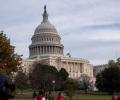
On the 40th day of the most extended government shutdown in US history, senators returned from recess Sunday for a rare weekend session, preparing to vote on whether to advance a House-passed spending bill aimed at reopening the government.
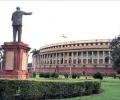
Minister of State of Labour and Employment, Harish Rawat introduced the Employees' State Insurance (Amendment) Bill, 2009, to carry out necessary changes in the Employees State Insurance Act, 1948.

A bill to increase foreign direct investment (FDI) in the insurance sector from 49 per cent to 74 per cent was approved by Parliament with the Lok Sabha giving green signal to the legislation by a voice vote on Monday.

The debate over working hours flared up after Infosys Co-founder N R Narayana Murthy called for 14-hour workdays.
The CPI (M) members seemed determined to thwart the bill, aimed at increasing the FDI limit in the insurance sector. As Minister of State for Finance P K Bansal rose to introduce the Insurance Laws (Amendment) Bill, 2008, CPI (M) member T K Rangarajan tried to grab the copy of the bill from him. An agitated-looking external affairs minister Pranab Mukherjee pushed Rangarajan to protect Bansal. Another minister Meira Kumar rushed to shield Bansal, who introduced the bill.
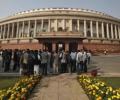
The National Democratic Alliance government is keen on the passage of the Insurance Bill before Prime Minister Narendra Modi's visit to the US to send out a message that economic reforms are back on track in India. Anita Katyal reports
The Left parties, Janata Dal (United), and two other Opposition members on the committee opposed raising the foreign direct investment limit in the insurance sector from 26 per cent to 49 per cent.

Lack of numbers would upstage it in Rajya Sabha

Employees of public sector general insurance (PSGI) companies are observing nationwide one-day strike on Wednesday to protest against intended privatisation of state-owned insurers. The Joint Front of Trade Unions in PSGI companies met on Monday and decided to protest against the decision of the government to privatise PSGI companies. The unions have given a call for one-day strike against the passage of the General Insurance Business (Nationalisation) Amendment Bill 2021 in the Lok Sabha, General Insurance Employees All India Association general secretary K Govindan said. Employees of all four PSGI companies are participating in the day-long strike, he said.

Govt is keen to push reforms in the insurance sector.

Full exemption for all health insurance premiums and reinsurance or a reduction in the GST rate from 18% to 5% on health insurance services is likely.

The Rajya Sabha on Thursday approved a bill to raise the foreign investment limit in the insurance sector to 74 per cent, with Finance Minister Nirmala Sitharaman saying while control will go to foreign companies, the majority of directors and key management persons will be resident Indians who will be covered by law of the land.

The insurance Bill seeks to increase the cap on shareholding of foreign investors
The Union Cabinet on Thursday deferred a decision on the much-awaited insurance law amendment Bill that aims to raise the foreign direct investment cap for insurance companies from 26 per cent to 49 per cent. No decision was taken today as Finance Minister P Chidambaram was not present at the meeting.
The Life Insurance Corporation of India has the wherewithal to acquire a composite license, a top source aware of the development told Business Standard, adding that the insurance behemoth may look into entering the health and general insurance segments. "LIC has the scale, capacity, IT infrastructure, and the distribution reach to take advantage of the composite license. "LIC is looking at organic as well as inorganic growth opportunities.

Currently, the select committee is considering the Bill.

An all-party meeting on Monday failed to hammer out a consensus over the controversial Insurance Bill, which was scheduled to be taken up in Rajya Sabha.

The move would help insurance firms to get much needed capital from overseas partners.

The Congress has reasons to enjoy the BJP's discomfiture. After all, the Insurance Bill was introduced by the UPA government in 2008 but was constantly blocked by the BJP on some pretext or the other which was then in the Opposition.

Since Parliament is still in session, the government refrained from making an official statement but the ministers said there were ample 'precedents by the Congress governments in the past' of Bills being pushed through the ordinance route.

The Bill will come up for discussion in the upcoming winter session of the Parliament.

Congress insists on sending legislation to select committee, says will support it in winter session.

Insurance sector to get lot of foreign investment: Jaitley.
